Providence
Providence is the capital of Rhode Island.
A historic city founded on ideas of religious freedom and safety from persecution.
What makes the capitol special
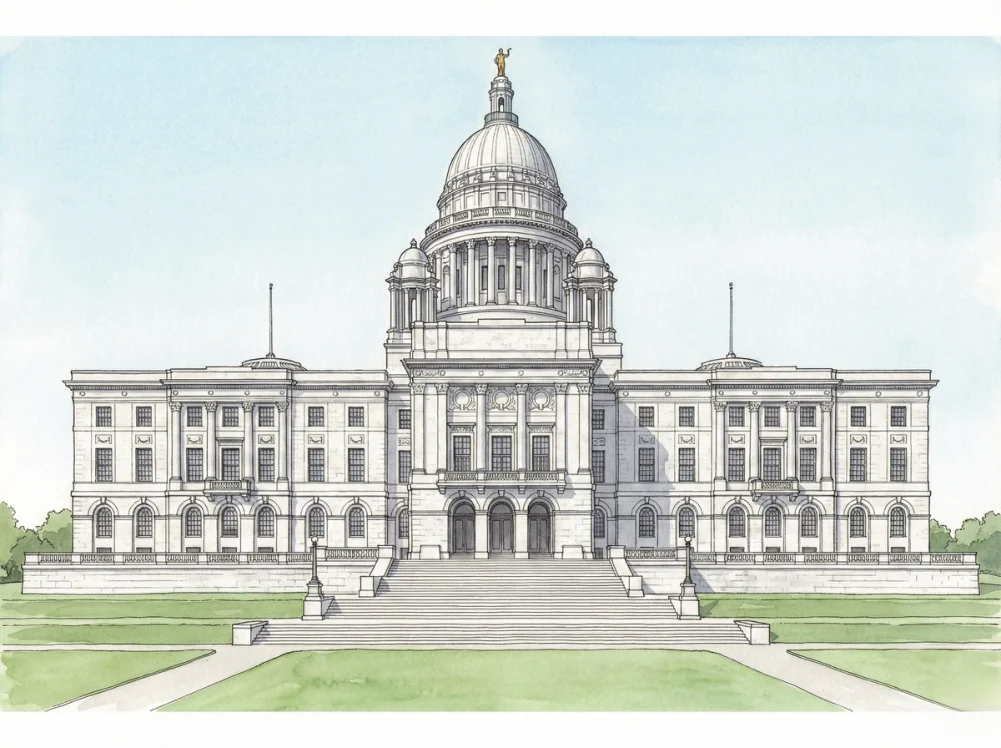
The Rhode Island State House was finished in 1904. It features one of the largest self-supporting marble domes in the world, rising 235 feet into the air. An 11-foot statue called the Independent Man stands at the very top. Inside, the central hall features paintings that display the state’s colonial and industrial history.
Three places to visit
- RISD Museum – Explore amazing art and design collections from many different cultures and time periods.
- Benefit Street’s “Mile of History” – Walk past beautiful colonial houses along one of the most historic streets in America.
- Brown University Campus Walk – Explore this historic Ivy League college campus on College Hill to see impressive buildings and open green spaces.
How the city got its name
Roger Williams named the city in 1636. He chose the name “Providence” to thank God for protecting him after he was forced to leave Massachusetts. The name reflects his belief in religious freedom and finding a safe place to live.

Why this city became the capital
For many years, Rhode Island’s government rotated among several meeting places, including Newport, Providence, Kingston, East Greenwich, and Bristol. In 1854, the rotation was narrowed to Newport and Providence. In 1900, Rhode Island’s government consolidated in Providence, which became the state’s single capital. Providence was chosen because of its central location and its importance as the state’s main center for business and culture.
From Celine Carlson’s 50 State Capitals: A Field Guide by a Girl Who Visited Them All, based on her visits to all 50 state capitals. About the author · Sources and research notes.