Harrisburg
Harrisburg is the capital of Pennsylvania.
A Susquehanna River crossing that grew into a key meeting point for the state.
What makes the capitol special
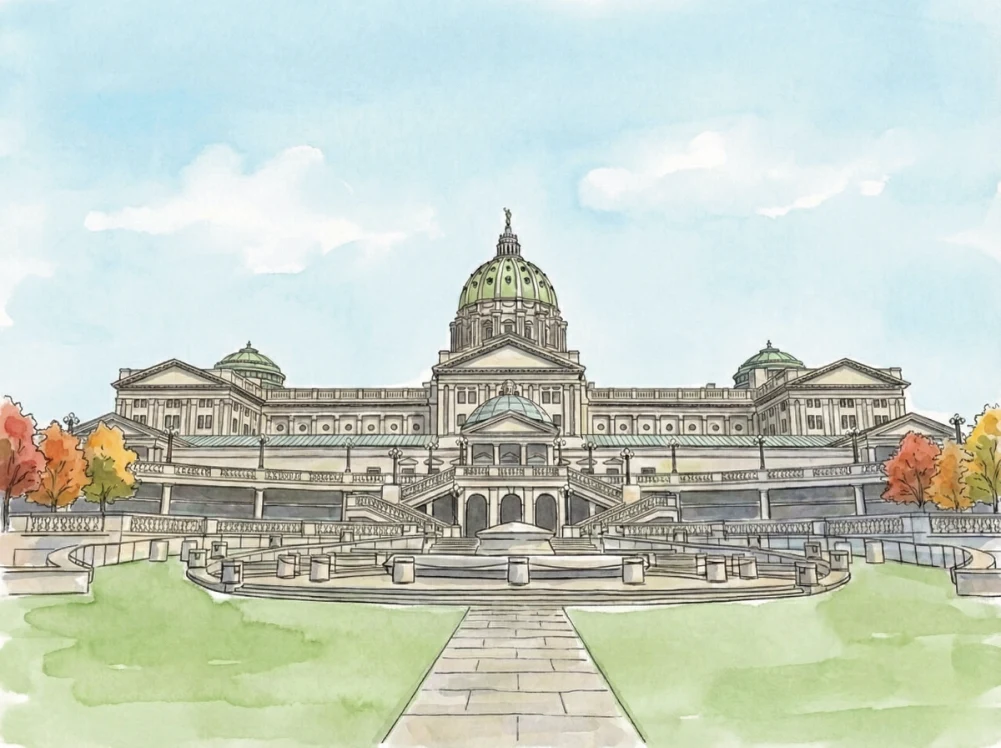
The Pennsylvania State Capitol was finished in 1906 and is known as a “Palace of Art.” It features a 272-foot dome inspired by the Renaissance style, topped with a 14-foot golden statue called Commonwealth. Inside, the building displays Pennsylvania’s history through beautiful stained glass, painted murals, and mosaic tile floors.
Three places to visit
- National Civil War Museum – Explore exhibits that cover the entire war from both the Union and Confederate points of view.
- Broad Street Market – Taste different foods from local vendors at one of the oldest markets in America that is still open today.
- City Island – Walk across a bridge to this island to enjoy baseball games, mini-golf, and other fun outdoor activities by the river.
How the city got its name
Harrisburg started as a settlement called Harris’s Ferry. It was named after John Harris Sr., who established a ferry service to help people cross the Susquehanna River.

Why this city became the capital
Harrisburg became the capital of Pennsylvania in 1812. Before that, the capital was located in Philadelphia (1682-1799) and then Lancaster (1799-1812). Harrisburg was chosen because it was centrally located on the Susquehanna River. It was also a growing center for trade, making it the perfect spot for the state government.
From Celine Carlson’s 50 State Capitals: A Field Guide by a Girl Who Visited Them All, based on her visits to all 50 state capitals. About the author · Sources and research notes.