Nashville
Nashville is the capital of Tennessee.
A river city that became a major center for travel, trade, and music.
What makes the capitol special
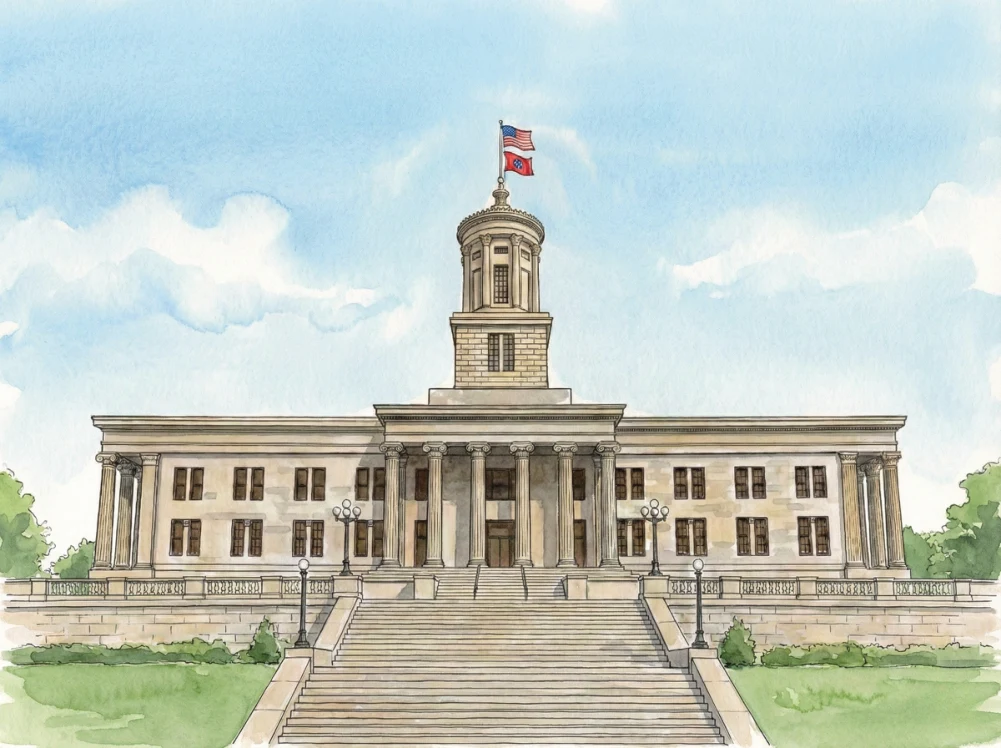
The Tennessee State Capitol was finished in 1859. Designed in the Greek Revival style, it is built from limestone and features a tower called a cupola instead of a dome. It is one of the oldest working capitols in the nation, and the grounds serve as the final resting place of U.S. President James K. Polk.
Three places to visit
- Ryman Auditorium – Visit the historic building known as the “Mother Church of Country Music,” famous for its history and perfect sound quality.
- Grand Ole Opry – See country music’s most famous stage, which hosts the longest- running live radio show in the world.
- Country Music Hall of Fame and Museum – Explore the story of country music through interactive exhibits and rare historical items.
How the city got its name
Nashville began as a settlement called Fort Nashborough. It was named after General Francis Nash, a Revolutionary War hero who died at the Battle of Germantown in 1777.

Why this city became the capital
Nashville officially became the permanent capital of Tennessee in 1843. Before that, the capital moved several times: Knoxville served from 1796 to 1812, Nashville from 1812 to 1817, Knoxville again from 1817 to 1818, and Murfreesboro from 1818 to 1826. After 1826, the legislature began meeting in Nashville, which was finally chosen because of its central location, strong economy, and importance as a transportation hub on the Cumberland River.
From Celine Carlson’s 50 State Capitals: A Field Guide by a Girl Who Visited Them All, based on her visits to all 50 state capitals. About the author · Sources and research notes.