Columbus
Columbus is the capital of Ohio.
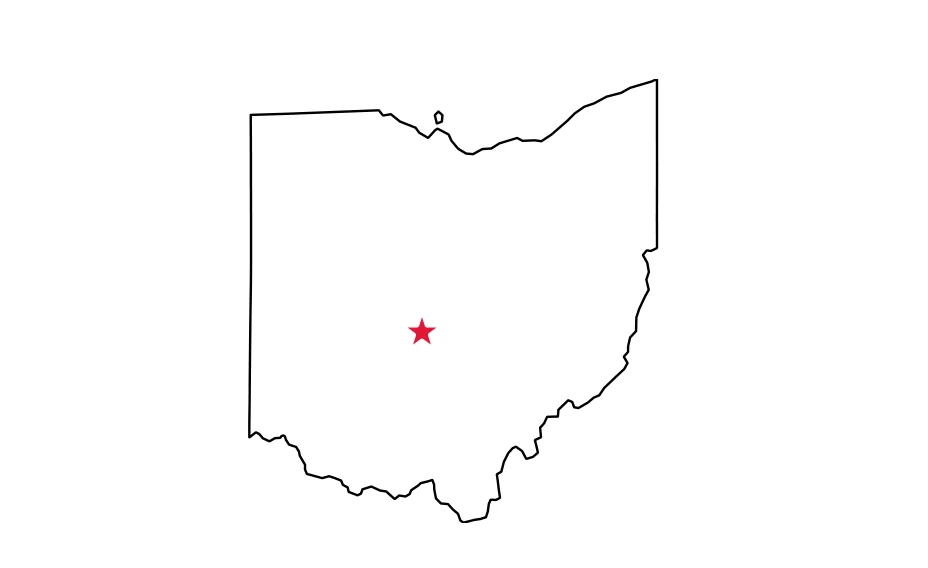
A centrally planned capital built in the middle of Ohio to help unify the growing state.
What makes the capitol special
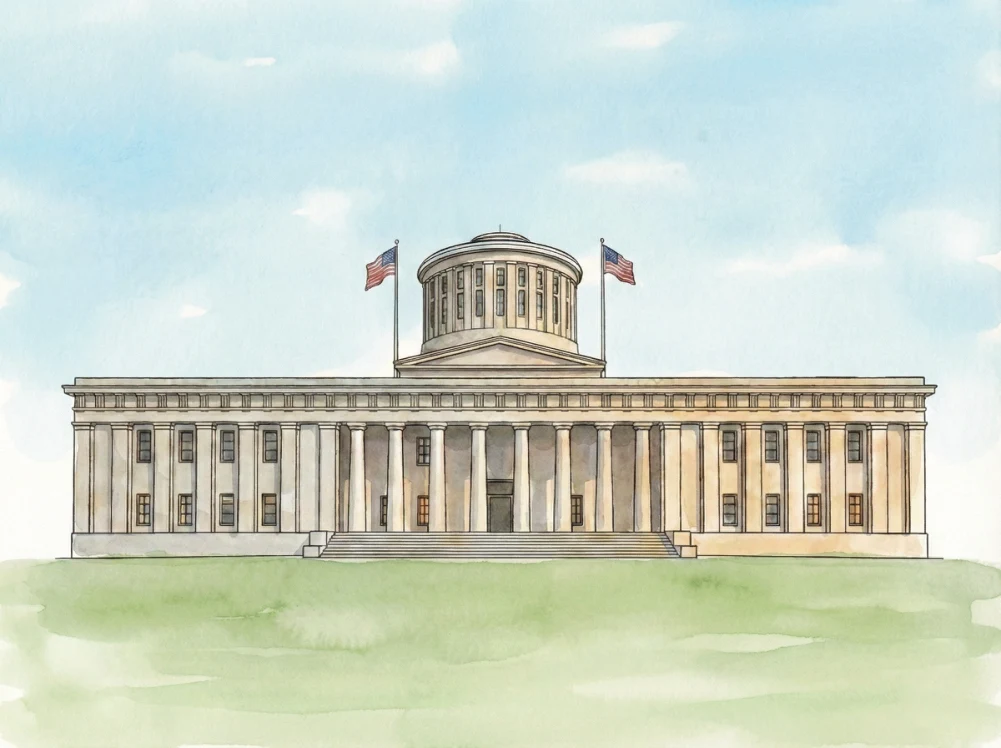
The Ohio Statehouse was finished in 1861. It features a Greek Revival design with a unique low dome. Inside, the central hall (or rotunda) has a skylight and murals that display Ohio’s history. The building is constructed from local limestone, which gives the Statehouse its famous gray color.
Three places to visit
- COSI (Center of Science and Industry) – Explore hundreds of amazing hands-on science exhibits downtown that are perfect for visitors of all ages.
- Franklin Park Conservatory and Botanical Gardens – See exotic plants, beautiful glass art by Dale Chihuly, and special butterfly exhibits.
- German Village & The Book Loft – Walk through charming brick streets and visit a massive, 32-room independent bookstore.
How the city got its name
Columbus was named in 1812 after the explorer Christopher Columbus. The name was chosen to represent Ohio’s pioneering spirit and the importance of exploration.
Why this city became the capital
Columbus was built specifically to serve as Ohio’s capital starting in 1816. Leaders chose this location because it was in the center of the state and allowed them to design a planned city. Before Columbus, the capital had been located in Chillicothe (1803-1810, 1812-1816) and Zanesville (1810-1812). Creating a new, carefully planned capital was a way to symbolize unity for the state.
From Celine Carlson’s 50 State Capitals: A Field Guide by a Girl Who Visited Them All, based on her visits to all 50 state capitals. About the author · Sources and research notes.