Madison
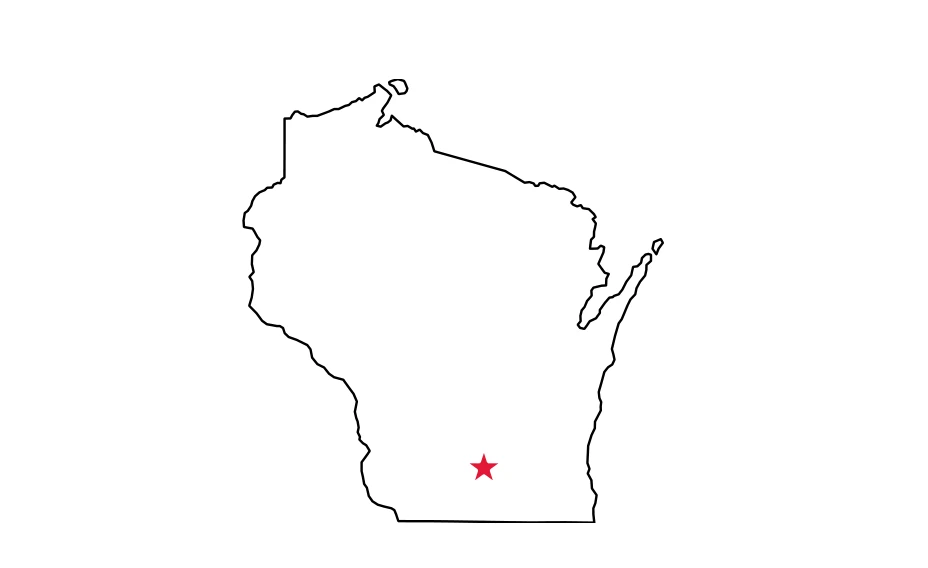
Madison is the capital of Wisconsin.
A central lakeside city named for James Madison and built to help unify the state.
What makes the capitol special
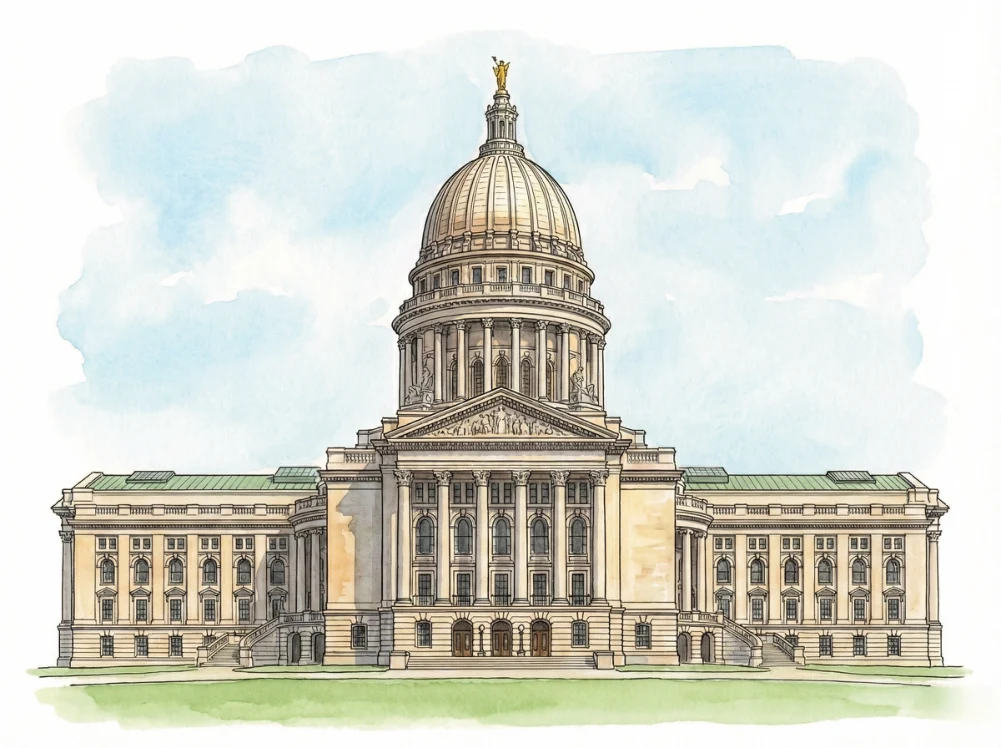
The Wisconsin State Capitol was finished in 1917. It features the largest granite dome in the nation, rising 284 feet high and topped by a statue simply called “Wisconsin.” Inside, the building uses over 40 different types of stone brought in from six continents. It also features murals that depict the state’s Native American and farming history.
Three places to visit
- Dane County Farmers’ Market on the Square – Visit one of the largest producer-only farmers’ markets in America, which wraps all the way around Capitol Square (Open Saturdays, usually April to November).
- Memorial Union Terrace (UW-Madison) – Relax by the lake on the famous sunburst chairs and enjoy local Babcock ice cream at this popular university gathering spot.
- Olbrich Botanical Gardens – Explore beautiful outdoor gardens and walk through a tropical greenhouse filled with free-flying birds and butterflies.
How the city got its name
Madison was named in 1836 to honor James Madison, the fourth U.S. president and the “Father of the Constitution.” The name was chosen shortly after he died.
Why this city became the capital
Wisconsin’s first territorial legislature met briefly in Belmont in 1836. During that session, legislators chose Madison as the permanent capital, even though it was still only a planned town at the time, and construction on its Capitol began in 1837. Madison was selected because it sits between Milwaukee and the Mississippi River. James Duane Doty helped convince leaders to choose the site by donating land and naming the streets after America’s Founding Fathers.
From Celine Carlson’s 50 State Capitals: A Field Guide by a Girl Who Visited Them All, based on her visits to all 50 state capitals. About the author · Sources and research notes.