Tallahassee
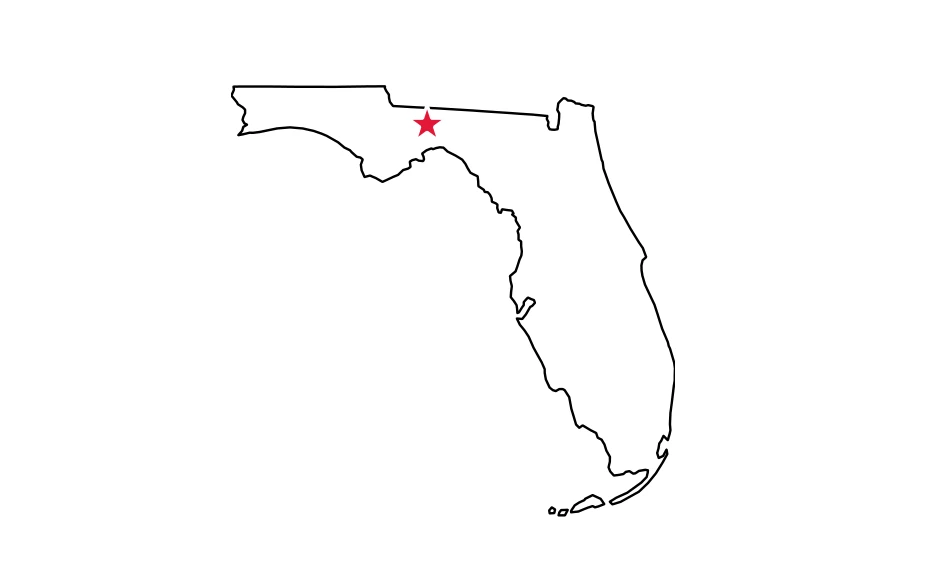
Tallahassee is the capital of Florida.
A capital placed between early Florida’s two main cities to help unite the territory.
What makes the capitol special
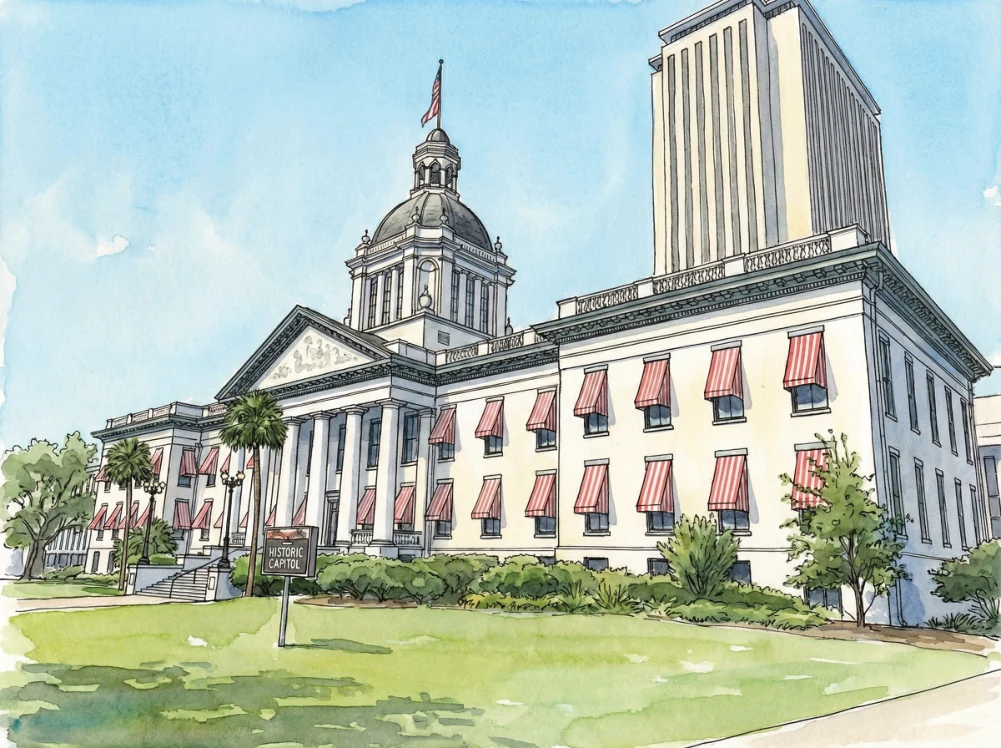
Florida’s Capitol complex includes two very different buildings: the Historic Capitol and the New Capitol. The Historic Capitol was finished in 1845 and has been restored to its 1902 appearance. It features a stained-glass dome, historic legislative rooms, and red-and-white striped awnings. Standing right next to it is the 22-story New Capitol. Finished in 1977, this tall building uses a modern design and houses the state government’s offices.
Three places to visit
- Wakulla Springs State Park – Take a guided river boat tour through one of the world’s largest freshwater springs, with chances to see alligators, birds, and manatees.
- Mission San Luis de Apalachee – See what life was like in the 17th century at this rebuilt Spanish mission and Apalachee village.
- Tallahassee Museum – Learn about North Florida’s history, nature, and wildlife at this unique outdoor museum.
How the city got its name
The name Tallahassee comes from the Muskogean words “Talwa Hassee.” This phrase means “old town” or “old fields.” The name honors the area’s history as an ancient settlement for the Apalachee tribe.
Why this city became the capital
Tallahassee became the capital in 1824. It was chosen as a compromise between two other cities, Pensacola and St. Augustine, which had shared the title from 1821 to 1824. Tallahassee was selected because it was located halfway between these two cities, making it easier for people from both East and West Florida to reach.
From Celine Carlson’s 50 State Capitals: A Field Guide by a Girl Who Visited Them All, based on her visits to all 50 state capitals. About the author · Sources and research notes.